Showing posts with label update. Show all posts

The Lives of Others

#66 in Best of the 21st Century?, a series counting down the most acclaimed films of the previous decade.

Hauptmann Gerd Wiesler (Ulrich Mühe) is a top Stasi agent, not the kind whose flashy skills and pride draw attention to himself, but the kind who quietly and methodically does his job, never questions authority, and seems to actually believe in the principles he operates under – or at least has never given them enough thought to really object. Then again, it’s hard to tell; the very reticence which makes him an ideal snoop and a hard-to-read interrogator means that we can’t quite be sure what’s going on in his mind: is he a loyal soldier, or merely someone who knows his place? German director Florian Henckel von Donnersmarck’s debut film, the 2006 winner for Best Foreign Film, The Lives of Others is about Wiesler’s slipping grasp on his own stoic rigidity, internal and consequentially external as well. The suggestive title conflates state-sanctioned snooping with sympathetic voyeurism, and indeed as Wiesler spies on a bourgeois artist couple, playwright Georg Dreyman (Sebastian Koch) and actress Christa-Maria Sieland (Martina Gedeck), his impassive surveillance gives way to emotional involvement – eventually one will have to give in to the other. Village Voice critic J. Hoberman has astutely noted the similarity to Wim Wenders’ seminal Wall- era Wings of Desire, writing, “No less than Bruno Ganz’s empathetic seraphim, Wiesler longs to be human.” Indeed, after listening in on a robust lovemaking session, Wiesler orders himself a home visit from a busy (and buxom) prostitute; though perhaps physically satisfying, it doesn’t quite scratch the spiritual itch Wiesler has been developing. Perhaps more telling is an encounter on an elevator just prior. A little boy, bouncing a ball casually asks Wiesler if he’s “really Stasi”; asked if he knows what this even means, the boy inadvertently informs on his father’s bilious characterization of the secret police. “What is the name of your f-” Wiesler stops himself, and pauses: “…of your ball?” The little boy chuckles and runs off, not knowing how close he came to turning the old man in. And Wiesler probably wonders what possessed him to show mercy, a quality he may not even have realized was within his power until now.

Continue Reading »

The Gleaners & I


by Joel Bocko

#59 in Best of the 21st Century?, a series counting down the most acclaimed films of the previous decade.
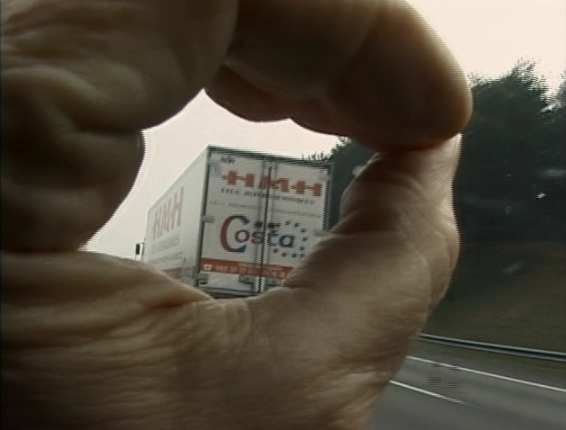
"Again one hand filming the other hand, and more trucks. I'd like to capture them. To retain things passing? No, just to play.
In Agnes Varda's documentary The Gleaners & I (a more literal translation from the French would be "The Gleaners & The Gleaner", or even "Gleaneress") play, investigation, and contemplation are all intricately yet loosely wound together - each element distinct yet forming an upretentiously ambitious whole, much like the found-object artpieces Varda highlights throughout. Her subject, as you might have gathered (no pun intended), is gleaning: in all its forms. We are introduced to the classical gleaners, the peasant women who would follow the harvest by crouching and stooping through the fields, rummaging for leftovers once the more illustrious agricultural bounty was carried off. We see such gleaners in famous French paintings, and meet one or two who reminisce only - it seems that this more traditional form of gleaning has fallen by the wayside: mechanized reaping has become too precise and so few crops are left behind these days. This we learn in the first five minutes of the 90-minute film; what follows is an eager, inquisitive investigation of gleaning in all its latter-day manifestations...

Continue Reading »

L'Enfant

#57 in Best of the 21st Century?, a series counting down the most acclaimed films of the previous decade.

You’re about halfway through L’Enfant when you realize whom exactly the title refers to. Sonia (Déborah François) has just had a baby boy, and when the movie opens, she’s seeking the child’s father. He’s not at his apartment, which is occupied by a surly couple who slam the door in her face (a gesture that will be repeated throughout the film, although eventually she’s the one doing the slamming). When she finds him he’s on the street, wandering between cars stalled at a stop light, begging for change. Bruno (Jérémie Renier) is a scruffy young man, who could be anywhere from mid-twenties to early thirties. The indeterminacy of his age is telling; while his thick features suggest a manliness, his mop of hair, puppy-dog eyes, and perpetually mischievous grin suggest perpetual boyhood. Though Sonia is clearly his junior, she manages to mix a girlish playfulness (she’s constantly goofing around with Bruno, amidst shrieks of laughter) with a motherly concern for her new charge. Bruno, on the other hand, as soon as he’s left alone with the baby, tries to sell his own son.

Continue Reading »

Tropical Malady

#55 in Best of the 21st Century?, a series counting down the most acclaimed films of the previous decade.

We’ve heard that love’s a bitch, and a battlefield, but in the 2004 Thai film Tropical Malady, writer/director Apichatpong Weerasethakul tells us it’s a tiger too. Or at least that’s one interpretation. Actually, at times it can be hard to know exactly what Apichatpong is after. As with the filmmaker’s later Syndromes and a Century (reviewed in a previous incarnation of this series), Tropical Malady divides neatly into two halves, but the way the halves relate to each other is different. In Syndromes, the different parts of the film are symmetrical, like parallel lines – they relate similar events in radically different surroundings. Malady on the other hand connects it’s first and second half with a joint and then lets them spin in entirely different directions, until the thread connecting them seems stretched awful thin. The two halves are perpendicular rather than parallel – maybe they’re better considered as two separate films, but here they are presented together, their interconnections left for us to tease out.

Continue Reading »

How to Train Your Dragon

[As I am currently on hiatus, posts like this will be more the exception than the rule. For further details, see here.]

If there's one form that's been thriving recently, it's the animated film. In the live-action realm, other genres have proved popular without really tapping it into the traditional sources of America's cinematic strength (imagination, storytelling, fantasy). Non-animated movies often seem to have lost touch with the power that  old Hollywood exuded. Contemporary screenwriting focuses more often on themes and ideas than stories and feelings, technique has adopted the fragmented point of view, and while naturalism has been avoided a surface "realism" is all the rage - blockbusters are darker and grittier than they were in the past (though, ironically, excessive CGI has rendered their textures less real than ever). Live-action films have achieved a "flatness" - a focus on surfaces and text - while animated films thrive in a world of created depth, in which computer animation is finally un-shackled from its obligation to dutifully mimic reality and allowed to range free. Most of the great animated films of the epoch have been Pixar movies, but How to Train Your Dragon may be Dream Works' strongest contribution to the pantheon yet.

Read more »

Sherlock Holmes

He never says "Elementary, my dear Watson" and never once dons the infamous double-billed hat. He smokes a pipe - and it's a doozy - but trades unflappability for a frenetic messiness which allows his peerless skills of deduction to remain the calm at the center of the storm. Remaining a bachelor, he nonetheless has a love interest, a criminal to boot; but he does not let his heart distract his mind (shades of "I hope they don't hang you by that pretty little neck of yours."). He retains a faith in the remarkable powers of reason to knock down walls and illuminate the hazy, even in the face of a supernatural foe. It's Sherlock Holmes, all right -and that we accept Robert Downey, Jr.'s reinterpretation of the character (or is the word now "reboot" - speaking of which: a "reboot" of Jurassic Park? Seriously?? But I digress...) indicates the degree to which some fundamental aspect of Arthur Conan Doyle's sleuth transcends his common pop cultural trappings. Downey, director Guy Ritchie, and a bevy of screenwriters bend and twist Holmes with enough force to make Gumby snap, yet Sherlock remains Sherlock.

Greenberg

If you've seen the previews, you know that Greenberg features Ben Stiller in midlife crisis mode, wandering around L.A. looking lost and offering sardonic observations (at a coke party, he informs the kids that they were too pampered, growing up listening to "Baby Mozart"). If you've seen Noah Baumbach's recent films - the excellent divorce memoir, er, fictional piece The Squid and the Whale or the repulsive Margot at the Wedding - you'll know that the film's bound to have more up its sleeve than the genial trailer indicates. Indeed, Stiller's character - Roger Greenberg - is more asocial and pained (and oddly enough, more grounded) than the ads suggest. What's more, he is introduced gradually, tangentially, with the movie initially focusing on Florence Marr (Greta Gerwig), as she runs errands and does household chores for the rich Hollywood family she works for. She'll be looking after their house and dog while the yupster clan cavorts in Vietnam; meanwhile Roger, the brother of Gerwig's employer, will be staying in the home and supposedly building a doghouse - ostensibly for the pet, but it might as well be for himself.

Brothers

At first, all you can notice is how damn young everyone looks. Capt. Sam Cahill (Tobey Maguire) has the bearing and attitude of a grown man, but looks small and scrawny when uniformed as a Marine. He and his wife Grace (Natalie Portman) have two daughters, both well out of toddlerhood, and yet when they shepherd them through the living room or seat them at the dinnertable, they look like nothing else so much as two kids playing house. Sam's brother Tommy (Jack Gyllenhaal) is the only one here who really looks his age - yet as if to compensate for this physical maturity, he's the most immature in behavior, picking fights with his dad, getting drunk, banned from driving the car as if he's a 16-year-old who's been grounded. These characters hover uneasily between the youthfulness of their appearance (and perhaps the youthfulness of the roles we associate them with) and the gravity of the world they inhabit. The three characters - posed like Calvin Klein models in Brothers' weird poster - must face death, trauma, war, and the disintegration of a marriage, while raising children and trying to maintain their own sanity. They do this, or attempt to do this, as adults; this is one of the first movies to treat the Millennial generation as grown-ups.

Elephant

#51 in Best of the 21st Century?, a series counting down the most acclaimed films of the previous decade.

Of the two most cited interpretations, the most frequent reading of Gus Van Sant’s enigmatic title holds that it refers to “the elephant in the room,” which nobody wants to talk about. Yet this is facile – was it really true that nobody wanted to talk about Columbine in the wake of the 1999 high school massacre? Was this true even beforehand, given that Columbine was actually the climax to a spate of school shootings, all of which received ample press coverage, rather than the kickoff? Furthermore, what exactly is it that’s not being discussed? Social isolation? The influence of the media? Video games? Gun control? Violence in America? Not only were all of these issues seized upon after the killings, but Van Sant makes a point out of eschewing all these explanations in his film (giving each of them a bit of airtime before moving on to other matters). So no, there’s no elephant in the room here, and if there is, no one’s ignoring it. The second reading, the one that it seems Van Sant actually intended, references the allegory of the blind men and the elephant, each touching a different part of the body and varying wildly in how they describe the animal. Likewise, Van Sant’s meditative, almost cruelly cool film is, at 81 minutes, too vast to take in from one perspective – which is not to say it’s particularly deep.

Continue Reading »

The Girl with the Dragon Tattoo

When The Girl with the Dragon Tattoo opens, investigative journalist Mikael Blomkvist (Michael Nyqvist) has just been convicted of libeling a wealthy industrialist, the reporter's muckraking exposé having itself been exposed as a fraud. Blomkvist knows he was set up, that phony sources and fabricated evidence were used to lure him into a trap, but his sense of stoic resignation is palpable: he refuses an appeal, leaves his publication, even breaks off a relationship with a colleague. And then what does he do? With six months before his sentence begins, six months to relax or reflect or maybe run away? He accepts a job in a barren, isolated region dominated by a sinister, imposing family corporation called the Vanger Group. One of the Vangers, now a very old man, has a mission for Blomkvist: find out what happened to his teenage niece who disappeared in the sixties, and whose case has remained unsolved for forty years. With only half a year before he's behind bars, Blomkvist throws himself into work once again. That's dedication, and its very best, The Girl with the Dragoon Tattoo is immersed in this very sense of dedication.

The Blind Side

"The Charge of the White Brigade"

In a clip that received continuous play on Oscar night - featured on both the Barbara Walters special and as a favorite of the Awards broadcast when highlighting the nominated Blind Side - Leigh Anne Tuohy (Sandra Bullock), a blonde, beautiful, sassy Southern housewife with wealth and attitude to spare, confronts several young black men sitting on a stoop in the projects. Leaning forward after one of them calls her "bitch," she stares him down and fires back with everything in her arsenal. She lets him know that if he comes to her side of town, he's in for a world of hell, that she lunches with the D.A. on a regular basis, and that she's a full-fledged member of the NRA who's always packing. Earlier we've seen the sinister youth threaten gentle giant Michael Oher (Quinton Aaron), Leigh Anne's adopted son, with his own gun, all while boasting about his criminal operations and salivating over Leigh Anne and her teenage daughter. Yet now, confronted with a woman in heels, surrounded in his own territory, he cowers. Whatever his own prowess and presence in the ghetto, he can't touch the threat a pistol-packin' mama with an open line to the enforcers of political authority. And how are we supposed to feel about this? After all, as the young man is written, he deserves to be threatened and "put in his place." Yet the racial elements are impossible to ignore - as is the reflection that the film must know this, but proceeds anyway, without acknowledging the diatribe's deeper implications.

Summer Hours


[#48 in Best of the 21st Century?, a series counting down the most acclaimed films of the previous decade.]
_________

“So we beat on, boats against the current, borne back ceaselessly into the past.”
_________

“I took her hand in mine, and we went out of the ruined place; and, as the morning mists had risen long ago when I first left the forge, so, the evening mists were rising now, and in all the broad expanse of tranquil light they showed to me, I saw no shadow of another parting from her.”
_________

“Poor Mole stood alone in the road, his heart torn asunder and a big sob gathering, gathering, gathering, somewhere low down inside him, to leap up to the surface presently, he knew, in passionate escape. … Meanwhile, the wafts from his old home pleaded, whispered, conjured, and finally claimed him imperiously. He dared not tarry longer within their magic circle. With a wrench that tore his very heartstrings, he set his face down the road and followed submissively in the track of the Rat, while faint, thin little smells, still dogging his retreating nose, reproached him…”
. . . . .

Summer Hours, The Decline and Fall of the French Bourgeoisie, Three Generations. Olivier Assayas’ absorbing and poignant film is first an observation of life’s fleeting moments (one might say it’s more observant than the characters who experience these moments, without really appreciating them). It is also a wailing elegy to a France crumbling away in the globalized world, letting its culture and its people dribble from its borders like sand from a smashed hourglass. And finally the movie is a portrait of one family, three generations (old, middle-aged, young) and three siblings in that middle group (brother, sister, brother), who slowly and willingly lose their country home, and with it their fragile communal identity. These two triumvirates, the generations and siblings, are each anchored in the center – chronological in the case of the age group (those in the middle of their life dominate the running time of the film), geographic in the case of the brothers and sisters (the deceased matriarch’s eldest son lives in France and tries to hold the family together, while his sister flees west to New York, and his little brother flees east to China). Alas, as is so often the case, the center does not hold.

Continue Reading »

Green Zone

I was in a shopping mall when the first bombs dropped on Baghdad. It was spring break, 2003, and I was vacationing with my family in Florida, taking a breather from an unsatisfying freshman year of college and the incessant march to war that had accompanied it. Always a history buff, I was both fascinated and repelled by what was happening - the notion of invasion never made sense to me and Bush's justifications appeared half-baked at best, yet it was with a sense of relief that the inevitable drumbeat reached its crescendo (if it's going to happen, happen already!). And of course it was a bit overwhelming to experience such a historic moment, and to feel so frustratingly sidelined. That evening, in fact, sitting down for dinner at a plastic restaurant in the middle of touristy mega-plaza, I quizzed my parents about their own brushes with history: where had they been when JFK was killed? When a man walked on the moon?

I think we were onto the fall of the Berlin Wall when our waitress approached and let us know that they had just started bombing Iraq - earlier than anticipated, since Bush's 48-hour warning to Saddam had only passed a few hours ago, and the bombing had not been expected till tomorrow morning. Looking as if she was restraining tears, the young woman mentioned that she had a sister in the Reserves, stationed in Kuwait at that very moment, awaiting the ground invasion. She kept her cool; my mother cried for her. That night we huddled around the TV set in the hotel room and watched the eerie orange glow over the ancient city, and I remember feeling irked that, when we flipped the channels, normal programming was on some of the cable networks. The next morning, vacationers splashed and swam in the swimming pool but an uneasy sense of irreality hung in the air. In the lobby of the resort, families - I particularly remember the old men in Hawaiin shirts - gathered around the TV as a Rumsfeld press conference unfolded.

There we were, surrounded by palm trees and the heat, half a world away from the action. It was an unforgettable sensation. Why do I mention all of this, particularly when I try to avoid these autobiographical, anecdotal asides in my pieces? Because Green Zone re-awakened the feelings of that moment: the odd mixture of pride, frustration, confusion, and helplessness that accompanied the most ambitious and dramatic start of an American war since World War II. I saw the film the other night in a crowded multiplex (though the lines forming through the lobby were for the 3-D Alice in Wonderland) and before the movie we were deluged by Avatar advertisements for Coca-Cola and embarrassing promos for Kirstie Alley's self-humiliating new reality show (during which I put my head down and tried to read a book I'd brought along). The audience chatted and chuckled ironically at the self-aggrandizing trash flaunted across the screen, but they fell silent when the screen went to black. The mood was quiet, intent - suddenly we all seemed to be in the same boat again, riding stormy seas, this time headed into the maelstrom instead of huddling on the horizon, trying to squint and glimpse at what was going on inside.

Precious & Capitalism: A Love Story

Among its other bounties, March 9 brought two disparate, yet somehow overlapping, movies to disc. Both Precious and Capitalism: A Love Story are members of that rare breed, the socially-conscious American film. One is a narrative (based, as the advertising campaign never tired of reminding us, on a work of fiction by the author Sapphire), the other a documentary. One takes place twenty years ago (Precious is set in 1987), the other spans decades with the emphasis on how this history has culminated in the present day. And in the same spirit as these other differences, the films employ divergent approaches to their subjects. Precious zeroes in on the travails of its protagonist - the film touches on issues of race, class, sexuality, welfare politics, and education alternatives, but eschews didactic lectures (if not necessarily didactic characters or devices). Capitalism is, by nature, didactic - it's a Michael Moore film, after all, and even if he's toned down his personal appearances he still likes to tell us what he thinks and what he thinks we should think on the soundtrack.

Putting aside these obvious differences, take a moment to look at those posters. Some would suggest that their iconic, blocky form - employing recognizable silhouettes rather than detailed features - represent their explorations of American society: simplistic, broadly defined, perhaps cartoonish. I wouldn't necessarily go that far but the two movies are linked by a certain bombastic, preening thrust - and also by the very fact that they peek beneath the increasingly tattered surface of the American Dream, and can't help but be self-conscious about doing so.

Still Life

First things first, it’s very hard to capture the life of Still Life in a still. There were numerous images that caught my eye while watching the movie, and when it was over I tried to go back and pause certain moments to create a screen-capture on my computer. No dice, though I finally settled on the enticing image seen above. The problem was that all of these impressive visuals contained the essential value of movement, either of the camera, within the frame, or both. One particular sequence seemed ripe for pictures: a quiet scene in which characters dance on a rooftop at dusk, with the half-constructed metropolis blazing in the background and a yawning, unilluminated bridge stretching towards the hilly horizon. Yet each time I paused the simple panning motion, the still did not capture that visceral pull of the visuals, the interruption of a simple sweep somehow stripping the shot of its power.

Continue Reading »

Inglourious Basterds

Inglourious Basterds' hook is clever, canny, and seemingly irresistible. A squadron of Jewish-American soldiers, led by a gentile backwoodsmen (is there any other kind?), drops behind enemy lines in 1944 Germany and sets about killing as many Nazis as possible.  While Lt. Aldo Raine (Brad Pitt) leads his titular squadron on an Apache-inspired campaign of terror against the Germans, a quiet, beatiful young cinema owner endures the unwanted attention of a chipper Aryan sharpshooter. Unexpectedly, these overtures lead to a meeting with Goebbels, a tense dinner with the man who killed her family (he does not recognize her) and the opportunity to exact retribution on her kin's murderers. The climax sees the Basterds' official mission unknowingly collide with Shoshana's personal revenge plot, as a propaganda print and occupied theater goes up in flames, and the Fuhrer goes down in a flurry of bullets. Yes, the movie's hooky all right, but in the finished film the goofy high concept (Nazi-hunting Jewish guerrillas) is probably the least interesting element; one frequently wonders if Tarantino couldn't have made a better film by foregoing the cartoonish central device and withholding the residual hipster winking (dramatically toned down, but still a dominant element in the director's style).

Read more »

Bright Star


Bright Star, the tale of John Keats' and Fanny Brawne's doomed romance, unfolds over several seasons in Hempstead, England in 1819 - autumn, Christmas, lovers' springtime and summer, another autumn of mortality, finally the desolate winter of death. Its soundtrack makes ample use of Keats' pregnant poesy (in a bout of facile alliteration, I almost stupidly wrote "pregnant prose"!), but the film takes its emotional and narrative cues from Brawne's more innocent sense of first love. This makes for  a simpler, gentler, and perhaps less compelling film than one focused on the great artist. Not that Brawne was dull or simple - her acute sense of fashion is well-reflected in the film's delicate artfulness (particularly the Oscar-nominated costume design), while her obvious intelligence is displayed in the movie's dialogue, particularly her own early exchanges. Yet she is still in many ways a girl (emphasis on youth rather than gender), a very young woman in the throes of first love. The movie reflects this too and is imbued with an often pleasing naivitee which at times runs the risk of seeming prosaic.

Read more »

Oscar round-up

A round-up of Oscar reviews is up at Wonders in the Dark.

The Hurt Locker


Two pictures to sum up a decade. One, a man encased in defensive armour, surrounded by explosive cannisters. He's a stranger in a foreign land, an embattled American, homemade bombs weaving a spiderweb in the desert sands beneath his feet. The devices are all aimed in his direction like gigantic bullets, together forming a silent threat simmering just underneath the surface. Two, a man in a cavernous, overwhelming, colorful yet utterly sterile supermarket, faced down by hundreds upon hundreds of cardboard boxes, each containing processed and mass-produced snacks. More significant than the contents is the packaging - this is nutrition second, consumption first, and an empty, dissatisfying consumption at that. The bombs are existential threats; the boxes are not, and yet somehow their spiritual threat seems deeper. As Jason Bellamy astutely notes (in an observation which inspired the pictures and paragraph which open this piece), "In staring at all the cereal boxes on the shelf, he is presented with a multitude of choices, just as when he's disarming a bomb, but his choices don't mean anything. There's no 'wrong' choice. It's a reminder of how he misses the rush of duty, when every decision has a potentially life-altering consequence."

Pick your poison. Sgt. William James has certainly picked his.

Read more »

(This piece is cross-posted on Wonders in the Dark, where the rest of the "Best of the 21st Century" series will be exclusively unfolding.)

An Education

Of what value is an education? Humanity has sought experience and knowledge since the dawn of consciousness, and for just as long has been casting doubt upon its own learning. In particular, the highly structured, conventionalized "educations" of modern civilization have inspired criticism and confusion; counter-arguments have often used mere tradition as a recourse, to little satisfaction. In An Education, Jenny (Carey Mulligan) listens to the tired defenses of her elite school's headmistress (Emma Thomson) - "There's also the civil service" she declares as a last resort. Unimpressed, Jenny informs the older woman that she'll have to do much better if someone asks for the point of all this experience in the future; an education which merely perpetuates itself (all those encouraging Jenny to complete her schooling have themselves become teachers) seems senseless to the young schoolgirl.