#66 in Best of the 21st Century?, a series counting down the most acclaimed films of the previous decade.
Hauptmann Gerd Wiesler (Ulrich Mühe) is a top Stasi agent, not the kind whose flashy skills and pride draw attention to himself, but the kind who quietly and methodically does his job, never questions authority, and seems to actually believe in the principles he operates under – or at least has never given them enough thought to really object. Then again, it’s hard to tell; the very reticence which makes him an ideal snoop and a hard-to-read interrogator means that we can’t quite be sure what’s going on in his mind: is he a loyal soldier, or merely someone who knows his place? German director Florian Henckel von Donnersmarck’s debut film, the 2006 winner for Best Foreign Film, The Lives of Others is about Wiesler’s slipping grasp on his own stoic rigidity, internal and consequentially external as well. The suggestive title conflates state-sanctioned snooping with sympathetic voyeurism, and indeed as Wiesler spies on a bourgeois artist couple, playwright Georg Dreyman (Sebastian Koch) and actress Christa-Maria Sieland (Martina Gedeck), his impassive surveillance gives way to emotional involvement – eventually one will have to give in to the other. Village Voice critic J. Hoberman has astutely noted the similarity to Wim Wenders’ seminal Wall- era Wings of Desire, writing, “No less than Bruno Ganz’s empathetic seraphim, Wiesler longs to be human.” Indeed, after listening in on a robust lovemaking session, Wiesler orders himself a home visit from a busy (and buxom) prostitute; though perhaps physically satisfying, it doesn’t quite scratch the spiritual itch Wiesler has been developing. Perhaps more telling is an encounter on an elevator just prior. A little boy, bouncing a ball casually asks Wiesler if he’s “really Stasi”; asked if he knows what this even means, the boy inadvertently informs on his father’s bilious characterization of the secret police. “What is the name of your f-” Wiesler stops himself, and pauses: “…of your ball?” The little boy chuckles and runs off, not knowing how close he came to turning the old man in. And Wiesler probably wonders what possessed him to show mercy, a quality he may not even have realized was within his power until now.
Continue Reading »
Showing posts with label "Best of the 21st Century?". Show all posts
The Gleaners & I
by Joel Bocko
#59 in Best of the 21st Century?, a series counting down the most acclaimed films of the previous decade.
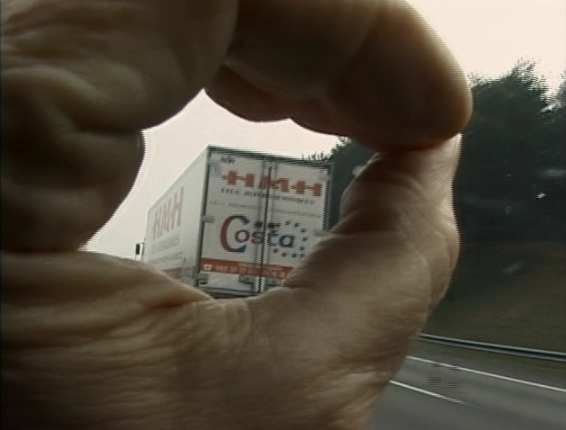
"Again one hand filming the other hand, and more trucks. I'd like to capture them. To retain things passing? No, just to play.In Agnes Varda's documentary The Gleaners & I (a more literal translation from the French would be "The Gleaners & The Gleaner", or even "Gleaneress") play, investigation, and contemplation are all intricately yet loosely wound together - each element distinct yet forming an upretentiously ambitious whole, much like the found-object artpieces Varda highlights throughout. Her subject, as you might have gathered (no pun intended), is gleaning: in all its forms. We are introduced to the classical gleaners, the peasant women who would follow the harvest by crouching and stooping through the fields, rummaging for leftovers once the more illustrious agricultural bounty was carried off. We see such gleaners in famous French paintings, and meet one or two who reminisce only - it seems that this more traditional form of gleaning has fallen by the wayside: mechanized reaping has become too precise and so few crops are left behind these days. This we learn in the first five minutes of the 90-minute film; what follows is an eager, inquisitive investigation of gleaning in all its latter-day manifestations...
Continue Reading »
L'Enfant
#57 in Best of the 21st Century?, a series counting down the most acclaimed films of the previous decade.
You’re about halfway through L’Enfant when you realize whom exactly the title refers to. Sonia (Déborah François) has just had a baby boy, and when the movie opens, she’s seeking the child’s father. He’s not at his apartment, which is occupied by a surly couple who slam the door in her face (a gesture that will be repeated throughout the film, although eventually she’s the one doing the slamming). When she finds him he’s on the street, wandering between cars stalled at a stop light, begging for change. Bruno (Jérémie Renier) is a scruffy young man, who could be anywhere from mid-twenties to early thirties. The indeterminacy of his age is telling; while his thick features suggest a manliness, his mop of hair, puppy-dog eyes, and perpetually mischievous grin suggest perpetual boyhood. Though Sonia is clearly his junior, she manages to mix a girlish playfulness (she’s constantly goofing around with Bruno, amidst shrieks of laughter) with a motherly concern for her new charge. Bruno, on the other hand, as soon as he’s left alone with the baby, tries to sell his own son.
Continue Reading »
You’re about halfway through L’Enfant when you realize whom exactly the title refers to. Sonia (Déborah François) has just had a baby boy, and when the movie opens, she’s seeking the child’s father. He’s not at his apartment, which is occupied by a surly couple who slam the door in her face (a gesture that will be repeated throughout the film, although eventually she’s the one doing the slamming). When she finds him he’s on the street, wandering between cars stalled at a stop light, begging for change. Bruno (Jérémie Renier) is a scruffy young man, who could be anywhere from mid-twenties to early thirties. The indeterminacy of his age is telling; while his thick features suggest a manliness, his mop of hair, puppy-dog eyes, and perpetually mischievous grin suggest perpetual boyhood. Though Sonia is clearly his junior, she manages to mix a girlish playfulness (she’s constantly goofing around with Bruno, amidst shrieks of laughter) with a motherly concern for her new charge. Bruno, on the other hand, as soon as he’s left alone with the baby, tries to sell his own son.
Continue Reading »
Tropical Malady
#55 in Best of the 21st Century?, a series counting down the most acclaimed films of the previous decade.
We’ve heard that love’s a bitch, and a battlefield, but in the 2004 Thai film Tropical Malady, writer/director Apichatpong Weerasethakul tells us it’s a tiger too. Or at least that’s one interpretation. Actually, at times it can be hard to know exactly what Apichatpong is after. As with the filmmaker’s later Syndromes and a Century (reviewed in a previous incarnation of this series), Tropical Malady divides neatly into two halves, but the way the halves relate to each other is different. In Syndromes, the different parts of the film are symmetrical, like parallel lines – they relate similar events in radically different surroundings. Malady on the other hand connects it’s first and second half with a joint and then lets them spin in entirely different directions, until the thread connecting them seems stretched awful thin. The two halves are perpendicular rather than parallel – maybe they’re better considered as two separate films, but here they are presented together, their interconnections left for us to tease out.
Continue Reading »
We’ve heard that love’s a bitch, and a battlefield, but in the 2004 Thai film Tropical Malady, writer/director Apichatpong Weerasethakul tells us it’s a tiger too. Or at least that’s one interpretation. Actually, at times it can be hard to know exactly what Apichatpong is after. As with the filmmaker’s later Syndromes and a Century (reviewed in a previous incarnation of this series), Tropical Malady divides neatly into two halves, but the way the halves relate to each other is different. In Syndromes, the different parts of the film are symmetrical, like parallel lines – they relate similar events in radically different surroundings. Malady on the other hand connects it’s first and second half with a joint and then lets them spin in entirely different directions, until the thread connecting them seems stretched awful thin. The two halves are perpendicular rather than parallel – maybe they’re better considered as two separate films, but here they are presented together, their interconnections left for us to tease out.
Continue Reading »
Elephant
#51 in Best of the 21st Century?, a series counting down the most acclaimed films of the previous decade.
Of the two most cited interpretations, the most frequent reading of Gus Van Sant’s enigmatic title holds that it refers to “the elephant in the room,” which nobody wants to talk about. Yet this is facile – was it really true that nobody wanted to talk about Columbine in the wake of the 1999 high school massacre? Was this true even beforehand, given that Columbine was actually the climax to a spate of school shootings, all of which received ample press coverage, rather than the kickoff? Furthermore, what exactly is it that’s not being discussed? Social isolation? The influence of the media? Video games? Gun control? Violence in America? Not only were all of these issues seized upon after the killings, but Van Sant makes a point out of eschewing all these explanations in his film (giving each of them a bit of airtime before moving on to other matters). So no, there’s no elephant in the room here, and if there is, no one’s ignoring it. The second reading, the one that it seems Van Sant actually intended, references the allegory of the blind men and the elephant, each touching a different part of the body and varying wildly in how they describe the animal. Likewise, Van Sant’s meditative, almost cruelly cool film is, at 81 minutes, too vast to take in from one perspective – which is not to say it’s particularly deep.
Continue Reading »
Of the two most cited interpretations, the most frequent reading of Gus Van Sant’s enigmatic title holds that it refers to “the elephant in the room,” which nobody wants to talk about. Yet this is facile – was it really true that nobody wanted to talk about Columbine in the wake of the 1999 high school massacre? Was this true even beforehand, given that Columbine was actually the climax to a spate of school shootings, all of which received ample press coverage, rather than the kickoff? Furthermore, what exactly is it that’s not being discussed? Social isolation? The influence of the media? Video games? Gun control? Violence in America? Not only were all of these issues seized upon after the killings, but Van Sant makes a point out of eschewing all these explanations in his film (giving each of them a bit of airtime before moving on to other matters). So no, there’s no elephant in the room here, and if there is, no one’s ignoring it. The second reading, the one that it seems Van Sant actually intended, references the allegory of the blind men and the elephant, each touching a different part of the body and varying wildly in how they describe the animal. Likewise, Van Sant’s meditative, almost cruelly cool film is, at 81 minutes, too vast to take in from one perspective – which is not to say it’s particularly deep.
Continue Reading »
Summer Hours
[#48 in Best of the 21st Century?, a series counting down the most acclaimed films of the previous decade.]
_________
“So we beat on, boats against the current, borne back ceaselessly into the past.”
_________
“I took her hand in mine, and we went out of the ruined place; and, as the morning mists had risen long ago when I first left the forge, so, the evening mists were rising now, and in all the broad expanse of tranquil light they showed to me, I saw no shadow of another parting from her.”
_________
“Poor Mole stood alone in the road, his heart torn asunder and a big sob gathering, gathering, gathering, somewhere low down inside him, to leap up to the surface presently, he knew, in passionate escape. … Meanwhile, the wafts from his old home pleaded, whispered, conjured, and finally claimed him imperiously. He dared not tarry longer within their magic circle. With a wrench that tore his very heartstrings, he set his face down the road and followed submissively in the track of the Rat, while faint, thin little smells, still dogging his retreating nose, reproached him…”
. . . . .
Summer Hours, The Decline and Fall of the French Bourgeoisie, Three Generations. Olivier Assayas’ absorbing and poignant film is first an observation of life’s fleeting moments (one might say it’s more observant than the characters who experience these moments, without really appreciating them). It is also a wailing elegy to a France crumbling away in the globalized world, letting its culture and its people dribble from its borders like sand from a smashed hourglass. And finally the movie is a portrait of one family, three generations (old, middle-aged, young) and three siblings in that middle group (brother, sister, brother), who slowly and willingly lose their country home, and with it their fragile communal identity. These two triumvirates, the generations and siblings, are each anchored in the center – chronological in the case of the age group (those in the middle of their life dominate the running time of the film), geographic in the case of the brothers and sisters (the deceased matriarch’s eldest son lives in France and tries to hold the family together, while his sister flees west to New York, and his little brother flees east to China). Alas, as is so often the case, the center does not hold.
Continue Reading »
Still Life
First things first, it’s very hard to capture the life of Still Life in a still. There were numerous images that caught my eye while watching the movie, and when it was over I tried to go back and pause certain moments to create a screen-capture on my computer. No dice, though I finally settled on the enticing image seen above. The problem was that all of these impressive visuals contained the essential value of movement, either of the camera, within the frame, or both. One particular sequence seemed ripe for pictures: a quiet scene in which characters dance on a rooftop at dusk, with the half-constructed metropolis blazing in the background and a yawning, unilluminated bridge stretching towards the hilly horizon. Yet each time I paused the simple panning motion, the still did not capture that visceral pull of the visuals, the interruption of a simple sweep somehow stripping the shot of its power.
Continue Reading »
Continue Reading »
The Hurt Locker
Two pictures to sum up a decade. One, a man encased in defensive armour, surrounded by explosive cannisters. He's a stranger in a foreign land, an embattled American, homemade bombs weaving a spiderweb in the desert sands beneath his feet. The devices are all aimed in his direction like gigantic bullets, together forming a silent threat simmering just underneath the surface. Two, a man in a cavernous, overwhelming, colorful yet utterly sterile supermarket, faced down by hundreds upon hundreds of cardboard boxes, each containing processed and mass-produced snacks. More significant than the contents is the packaging - this is nutrition second, consumption first, and an empty, dissatisfying consumption at that. The bombs are existential threats; the boxes are not, and yet somehow their spiritual threat seems deeper. As Jason Bellamy astutely notes (in an observation which inspired the pictures and paragraph which open this piece), "In staring at all the cereal boxes on the shelf, he is presented with a multitude of choices, just as when he's disarming a bomb, but his choices don't mean anything. There's no 'wrong' choice. It's a reminder of how he misses the rush of duty, when every decision has a potentially life-altering consequence."
Pick your poison. Sgt. William James has certainly picked his.
Read more »
(This piece is cross-posted on Wonders in the Dark, where the rest of the "Best of the 21st Century" series will be exclusively unfolding.)
Best of the 21st Century?
The "Best of the 21st Century?" series has been re-booted and re-launched on Wonders in the Dark. The first review will be of The Hurt Locker, cross-posted on Wonders and Lost in the Movies one week from today. For now, there's a new list and a new intro.
A review of Invictus will be up on Lost in the Movies later today,
A Christmas Tale (& other stuff)
My review of A Christmas Tale is up in time for the holidays at Wonders in the Dark. So head over there to share your own thoughts on the film. Here's some more entries which have gone up recently:Syndromes and a Century
Kings and Queens (from the director of A Christmas Tale)
Merry Christmas to all applicable...(and a happy new year to all & sundry...)
Man on Wire
(What follows is my full review, originally written for the Examiner, which was initially linked up at this spot. From now on this will be its home.)Best of the 21st Century? (#196)
(Counting down the most acclaimed films of the decade.)
We're skipping ahead quite a few spots on the list, because Philippe Petit didn't play by the rules, and neither should we. So at #196, sure to advance (as the more recent films usually do over time)...Man on Wire, the true story of a man who walked on air, 1,368 feet of it to be exact. While observing that Petit did not play by the rules, it should not be assumed he was careless, absent-mindedly whimsical, or entirely spontaneous. His spirit may have conveyed such vivacious joie de vivre but within the impulsive performance artist was a rigorous disciplinarian. This is almost always the case with a great artist, but it's especially true of one whose art involves standing upon a thin wire, suspended between the two tallest buildings in the world, dancing 110 stories up from the pavement, where one wrong move, one ill-read gust of wind can end with the kind of flop you don't recover from.
So of course the aura of death hangs around this film, but it's a subdued background noise, one which we are only subconsciously aware of. After all, we know that Petit will survive - even if we haven't heard his marvelous story before, he's right there onscreen being interviewed, thirty years after the fact. The film even manages to make us forget, or only dimly remember, that if Petit remains alive and well, the towers which he traversed (which one might have reasonably expected to outlast the little man) are gone. That event is never addressed directly in the movie; indeed, it isn't even really addressed indirectly. Sometimes the documentary even seems to exist in a universe innocently independent of the tragedy (I never found myself thinking about the terror threat parallels as Petit and his crew avoided security in the towers).
Ye elsewhere, a weirdly, sadly tangential connection is evoked between Petit and the hijackers. Certainly, an early "scene" in which the participants describe their eerie "morning of" mood of subterfuge and steeliness carries strong connotations of terrorists bracing for action. Indeed, the "zero hour" calendar marking for Petit's plan says simply "the coup," and he watches numerous heist films to brace himself for the attempt. The extent of the planning, occurring in distant lands, existing under the radar, and involving ruses and phony identities, also calls to mind the al-Qaeda tactics, though we tend to be too involved in Petit's maneuvers to draw the connection overtly.
At any rate, as previously stated, by the time Petit and his allies (several Americans and several close French buddies) are inside the World Trade Center, on the top floor, setting up their rigging for Petit's only-hours-away crossing, we are too involved in this specific plan to draw grim parallels. Then, finally, on a foggy morning, Petit takes a deep breath and steps out onto the wire. The mist rises, a crowd gathers, and Philippe Petit begins his 45-minute performance...nearly an hour in real time, probably a moment in his mind, and an eternity for anyone who caught the spirit of the event and gaped upwards in awe (even a policeman seems dazed and vaguely moved by what he had just witnessed).
On the wire, Petit's all smiles (as the photographs - no film taken - attest): he moves, lithely and with deceptive ease, laying down, bending on one knee, walking back and forth, even gesturing to the crowd below like a benevolent guardian angel. The film, which has relied heavily (perhaps too heavily) on re-enactments till now, quietly steps back and lets the still-stunned voices of the witnesses and participants complement the mostly monochrome photos of Petit's leap of faith.
Here, after a few minutes, the lingering memories of a later date rise to the surface and settle in an aura of poignant melancholy around Petit's joyous demonstration. The crowd points and murmurs in disbelief, just as they would nearly thirty years later. A photo shows Petit on the wire, directly in between both towers, with an airplane (which almost looks to be the same size as him) soaring in the background. Here, in this one image, we can briefly sense the symmetry between tragedy and joy, negation and affirmation, destruction and liberation. In this tiny figure we have the actual, absolute, incarnate opposite of the horror which was unleashed on another bright morning. Not the organized might of a state, but one man, pushing himself to the limit, defying nature and law alike not with brute force or heartless cunning but with impishness; he is defiantly human, suspended between physical limits and spiritual release at the top of the world.
The danger, rebelliousness, and awesome skill of Petit's "coup" is worth remembering. Because even this joyful celebration had a sad falling-out. The friends who built his wings from scratch and steadied him as he got his bearings, had to watch Phillippe fly away into the vanishing horizon line, so to speak, never to return. Yes, he came down from the wire, and was whisked away by police. Charges were dropped in return for a public performance, the tightrope walker became a media hero, and he even bedded a groupie (hey, it was the 70s) while his girlfriend waited patiently for him to come back to earth. He never would. Both his lover and his friends recall, some with tears, how this was the end of their relationship with Petit. Details are left vague but it's implied that Petit's ego soared along with the rest of him, while the humbler souls who'd helped him every inch of the way could only wave goodbye.
Man on Wire is an excellent film about a beautiful gesture, one too in touch with the danger and torment of the edge to be sugary or sentimental, one too real (despite the excessive re-creations) to appear glib or manipulative. Even without relatively recent events, the movie would be moving, and the filmmakers wisely choose not to draw the parallels themselves, allowing us to do so - and also to ignore them in order to get at the universal truths which Petit's ascension of the abyss evokes. Petit not only maintained his balance between the twin towers, he also managed, philosophically, not to fall into either excessive comfort or destructive rebellion; his feat remains an inspiration to this day. If he'd fallen, of course, we'd be talking about his madness, and any film made would have been entirely different in tone. Yet if he hadn't run the risk of falling, neither his walk nor this movie would be nearly as powerful.
Labels:
"Best of the 21st Century?",
movie review,
response
Subscribe to:
Posts (Atom)